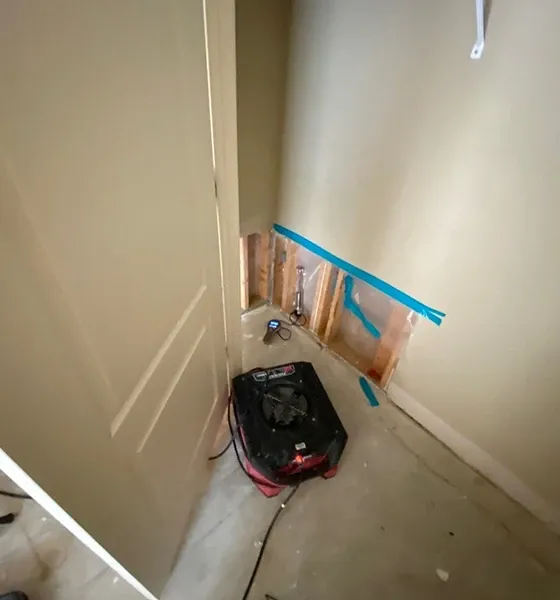
Repairing vs. Replacing Water-Damaged Drywall
Drywall Damage From Water: Guide of What To Do! Drywall water damage can be repaired or replaced, depending on the extent of the damage. If the damage is minor, such as small stains or superficial dampness, it can often be repaired. Minor water damage usually occurs when there is a small leak or brief exposure to water. In these cases, the drywall remains structurally intact and free from mold.
When to Repair Water-Damaged Drywall
For superficial issues where the drywall is still structurally sound, repair is often the right choice. The process involves:
- Drying: Use fans or dehumidifiers to eliminate moisture completely
- Cleaning: Apply a mild bleach solution to prevent mold development
- Patching: Use joint compound to fill holes and cracks, then sand smooth
- Painting: Repaint to match the surrounding surfaces
When to Replace Water-Damaged Drywall
If the water damage is extensive, replacement is usually necessary. Signs that indicate replacement include:
- The drywall is warped, sagging, or soft to the touch
- Mold is visible or there is a persistent musty smell
- The water exposure was prolonged or involved contaminated water
- Large areas are affected
Mold presents serious health risks and can develop within 24–48 hours of moisture exposure, so don’t delay.
The Replacement Process
- Remove the compromised drywall sections
- Inspect and treat the area for mold
- Install new drywall secured to studs
- Tape, mud, sand, and repaint the seams
24/7 Emergency Response
AllGood Restoration provides around-the-clock emergency response for water damage. Our team uses professional-grade moisture meters and thermal imaging to evaluate the full extent of the damage before recommending repair or replacement. Call us any time at (470) 861-9082.